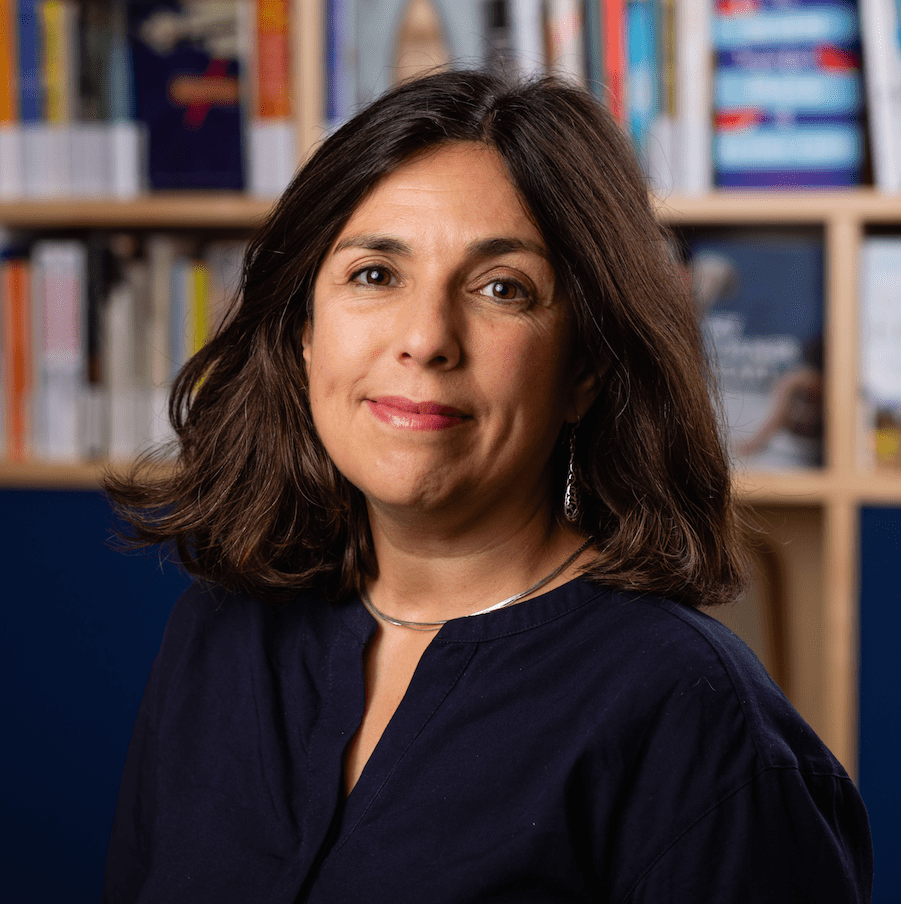
Award-winning writer, editor and journalist with extensive knowledge of writing and editing across print, TV, radio and online. For latest posts, do visit, follow or subscribe to Katharine on Substack.
Katharine has been a Royal Literary Fund Fellow at the University of West London and the LSE and is now an advisory Fellow to the Fund, mentoring new Fellows.
Katharine’s latest books include her prize-listed debut novel, The Low Road, which is out with Eye Books as an e-book and will be published as a paperback in autumn 2025. The novel was shortlisted for the New Angle Prize for Literature 2025. It also won the 2023 Silver Medal, Historical Women’s Fiction, Coffee Pot Book Club award and gained an Honourable Mention, Historical Romance category, Coffee Pot Book Club Award.

The Low Road was described by the Sydney Morning Herald as “A well-crafted and intensely dramatic novel, with characters you care about facing circumstances so dire a contemporary audience might strain to fully imagine them.” Australian Women’s Weekly described it as “soft, swelling storytelling”.
The Historical Novel Society called it “a tough read, paradoxically, because of the empathy with which Quarmby tells her story; tougher, too, because it is based on true events”, by the Tasmanian Times as “a beautifully written novel” and TripFiction as “an epic tale” – check out the reviews page and details of events about the book here.
You can buy personally inscribed copies of The Low Road and her other books directly from Katharine on this website, please email her for further details. Or buy from all good bookshops, the publisher, or online from https://uk.bookshop.org/p/books/the-low-road-katharine-quarmby/7418138.
Set in rural Norfolk, London and Australia in the early nineteenth century, it is based on a true story that Katharine uncovered in her Norfolk hometown, of a Norfolk woman, Mary Tyrell, who was staked through the heart after death in 1813. She had been questioned repeatedly about a suspected infanticide.
An older daughter, known only by the initials A.T., had survived. Katharine traced her to the Refuge for the Destitute in Hackney. She had met another destitute, Anne Simpkins, there and they forged a friendship that deepened into love. In December 1821 they stole laundry from the Refuge, but were caught, stood trial at the Old Bailey, and were sentenced to transportation.
The Low Road is about uncovering lost histories: the stories of poor women from rural areas, the stories of the imprisoned, the stories of convicts sent to penal colonies, the stories of people who often left no records as a result of illiteracy and hardship. It also contains an important strand of narrative that explores experiences left out of the history books: a same-sex romance that evolves into a marriage of sorts two centuries before this was legally possible.
Aside from The Low Road, Katharine mainly writes on environmental injustice, racism, disability rights, the care system, violence and hate crime. She is part of a European collaboration on environmental journalism, most recently co-editing a nine country investigation into the harms and risks of asbestos. This investigation also looked at asbestos in the maritime industry and asbestos in the environment in 2024. You can read Katharine’s UK and EU stories about these investigations on this link, alongside those of the team.
Katharine’s team is now looking at another key environmental issue, publishing later in 2025.
Previously to that, the team investigated the risk of pesticides. The ten country cross-border investigation was shortlisted for the European Parliament’s 2022 Daphne Caruana Galizia journalism prize. Katharine’s freelance journalism was shortlisted for the best feature category of the 2023 Freelance Journalism Awards.
You can view a portfolio of her selected journalism here.
Katharine was a Paul Hamlyn Foundation Ideas and Pioneers Grantee, 2021-2022 and Arts Council England award recipient 2023.
Her reporting has appeared in the Guardian, the Economist, the Atlantic, Newsweek, The Times of London, the Telegraph, the New Statesman, the Spectator and other outlets. She has worked as a senior editor at the Bureau of Investigative Journalism, Liberty Investigates and Disability Now, and as an associate editor for Newsweek and Prospect magazine. She has written for the magazine Private Eye since 2007. Katharine also writes book reviews for outlets ranging from the Guardian, to Historical Novel Review, to the Telegraph, Tablet and New Statesman.
She has appeared and been interviewed by ABC, BBC (Woman’s Hour, Front Row, Sunday Morning Live, BBC Breakfast, 5 Live, local radio), Channel 4 News, CBC, ITV and Sky.
Katharine also chairs and takes parts in public events and broadcasts. Most recently she has appeared on Radio 4’s The Reunion programme, participating in a discussion about the Dale Farm evictions, as well as acting as a consultant for Whistledown Productions, which produces the show; participated in a Twitter Space discussion about environmental injustice for the European Network Against Racism and been on Times Radio to discuss hate crime.
In November 2020 she was a key note speaker at the National Gallery, talking about the theory and practice of scapegoating marginalised groups as part of its Sin Exhibition, drawing on her books on disability, nomadic communities and ‘honour’ based violence. Other events include chairing a Wellcome Collection event on disability in 2019 and taking part in a panel discussion on life writing with English Pen in the same year. Katharine is also regularly invited to speak at conferences and at literary festivals. She has spoken about her work at Hay, Edinburgh, Bath and Bristol Festivals, and abroad, including at the Council of Europe in Rome, Italy.
Since 2018 Katharine has served as a committee member on the Crown Prosecution Service’s External Consultative Group on Hate Crime (ECG). She was an advisory board member for the consulting company, Fideres LLP, from 2021-2022, an organisation which exposes and pursues corporate wrong-doing. She has also served as a director of the Society of Authors, sitting on its management committee for a three year term from 2018 onwards. She sat on the finance sub-committee, the membership sub-committee and its editorial advisory board. This follows successful committee experience in a number of advisory roles, including serving as an expert advisor to the EHRC from 2010-2011 on its report and manifesto on disability hate crime, Hidden In Plain Sight (2011). She then advised the Association of Chief Police Officers and the National Policing Improvement Agency on their response to the EHRC’s report. She then joined the National Police Chiefs Council’s Deaf and Disability Forum in 2016.
She has written books for children, investigative non-fiction and shorter fiction. She works as a freelance editor for various organisations, including Investigative Reporting Denmark and the Bureau of Investigative Journalism, where she was previously production and digital editor. She was founding and launch editor for Liberty Investigates, an investigative journalism unit at the human rights organisation Liberty.
She was a Royal Literary Fund Fellow at the London School of Economics (2015-2017), was a contributing writer for Mosaic Science magazine and has worked as a Britain correspondent at the Economist, as well as a contributing editor for Newsweek Europe. She has spent most of her working life as a journalist and has made many films for the BBC, as well as working as a correspondent for The Economist, contributing to British broadsheets, including the Guardian, Sunday Times and the Telegraph.
Her latest books include Romani folk tales (cowritten with a Romani storyteller) and a chapter in a book about England as a place of refuge. Her latest non-fiction book was Hear My Cry, (Hachette Poland, 2015) written with the honour violence survivor, Diana Kader. She published the non-fiction book, No Place to Call Home: Inside the Real Lives of Gypsies and Travellers two years earlier (One World Publications, UK, 22 August 2013). She is currently writing a non-fiction book about female aggression, has finished a ghost-writing project, a novel and a picture book for publication in 2021/2022.
In 2007 Katharine started to investigate a number of violent killings of disabled men and women across the UK. As news editor of the disability magazine, Disability Now, she was able to put together the first national dossier of such crimes that year, following it up with an investigative report on disability hate crimes, Getting Away with Murder, for the charity Scope and the UK’s Disabled People’s Council, in 2008.
Her first book for adults, Scapegoat: why we are failing disabled people (Portobello Press, 2011), won a prestigious international award, the Ability Media Literature Award, in 2011. In 2012 Katharine was shortlisted for the Paul Foot Award for campaigning journalism, by the Guardian and Private Eye magazine, for her five years of campaigning against disability hate. Katharine and her fellow volunteer co-ordinators of the Disability Hate Crime Network, were honoured with Radar’s Human Rights People of the Year award, for their work on disability hate crime in 2010.


 Katharine Quarmby
Leave a reply to Thom Hickey Cancel reply